
In this guide
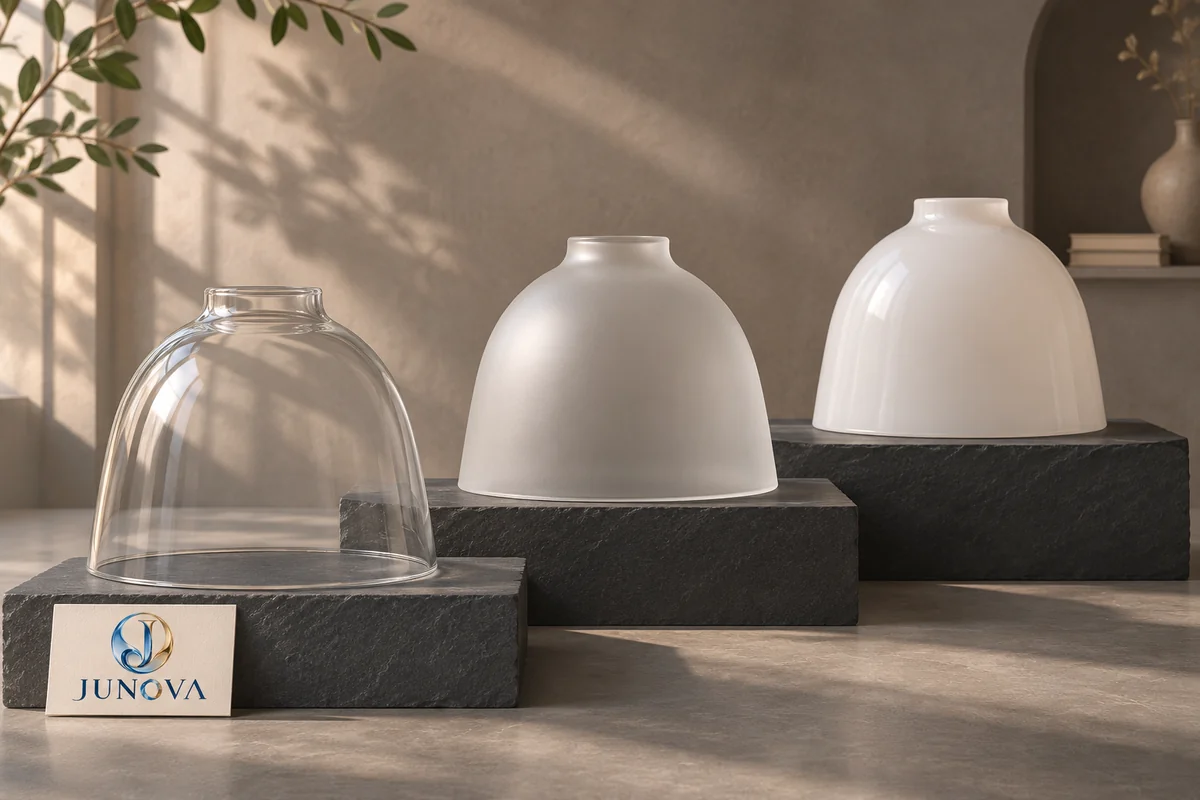
Choose clear glass when seeing the lamp and hardware is part of the design; shortlist frosted glass when you want a translucent surface that softens their outline; consider an opal direction when a milky white shade is central to the brief. Make the final choice with the intended light source and viewing positions. A finish name alone cannot tell you the completed fixture's brightness or whether a bright lamp will remain visible.
For lighting brands and hospitality buyers, the useful comparison has two decisions: how the glass should look when the light is off, and what a person should see when it is on. This guide keeps those decisions together without treating clear, frosted and opal as three fixed performance grades.
In this guide
Is opal glass the same as frosted glass?
They describe different appearance directions. Opal is a milky white glass direction; frosted describes a matte or translucent treatment. Ask how the selected finish is made and which surfaces or separate diffuser components create the appearance.
Shortlist clear if the visible lamp and hardware are part of the design; compare frosted or opal when a less transparent body is the goal. Make the choice on the actual fixture in lit and unlit states. The name alone cannot predict brightness, light transmission or comfort for the finished luminaire.
When should you shortlist clear, frosted or opal glass?
Begin with what the designer wants to reveal. A visible decorative lamp, a softly outlined light source and a white glass object create different compositions even before the fixture is switched on. Mullan Lighting's glass-type overview makes this practical distinction: clear is transparent, frosted is matte and translucent, and opal has a milky white appearance. Its descriptions are useful vocabulary, not numerical specifications for another supplier's shade.
| Direction | A reason to consider it | What to look for on the sample |
|---|---|---|
| Clear | The lamp, internal structure or decorative detail should remain visible. | Whether the visible lamp and hardware look intentional from the occupied area; reflections and visible surface marks. |
| Frosted | You want a matte or translucent treatment rather than a fully transparent shell. | How much of the lamp outline remains visible, the texture, and which surfaces have the treatment. |
| Opal | A milky white glass surface should become the visible object. | The unlit white tone, surface gloss, lit appearance and any visible bright patches on this assembly. |
A restaurant pendant with an intentionally visible decorative lamp could start with clear glass. A project that wants the glass body to read as the object could begin with a white opal sample. These are hypothetical design briefs, not claims that one finish is universally more comfortable, brighter or better for hospitality.
What does a glass shade finish name leave unspecified?
Ask for the finish description behind the label. Frosted may refer to a particular surface treatment, while opal identifies a white, translucent glass direction; neither word specifies the entire construction. Charles Edwards' finish selector identifies its frosted glass as sandblasted and describes its opal option separately. It also shows clear glass with a separate frosted tube inside. That example is a reminder to identify whether the appearance comes from the outer shade, another component or both.
For the proposed sample, record the base glass description, the treated surface, any separate diffuser and the visible gloss or texture. Ask the supplier to identify the selected process rather than assuming every frosted surface is made in the same way. Keep its care instructions with that finish.
Tint is another choice. A smoke, blue or green colour reference does not tell you whether the surface is clear or frosted. Record colour and transparency separately. When comparing a tinted alternative, keep the lamp and review conditions fixed; a change of bulb or room setting can obscure the decision you intended to make.
Do not infer a transmission percentage, a required wattage or a finished-luminaire rating from a photograph. If the project needs numerical lighting or regulatory evidence, define that requirement with the responsible fixture partner and request information for the named complete assembly.
How do you compare a glass shade in lit and unlit views?
Use one short record for each named candidate. Keep the fixture geometry, lamp reference, mounting position and room setting the same when comparing alternatives. Record any difference that cannot be held fixed, including shade shape or thickness, so a finish-only conclusion is not attached to a different assembly.

- Unlit, overall: view the shade with its surrounding materials. Note white tone or tint, gloss and whether the hardware should be visible.
- Unlit, surface: examine the agreed sample at a repeatable angle. Record texture, treatment boundaries and any appearance difference the buyer wants resolved.
- Lit, from the seat: inspect from the actual chair, bed or other intended seated position. Note the visible lamp, bright areas and reflections that matter to the design.
- Lit, from the approach: check from the standing route into the space. An open lower edge may expose a different view of the lamp than the side of the shade.
Photograph each candidate from the same positions, using the same camera settings where practical. Keep exposure and white balance consistent across comparison shots, and retain the original files alongside the observations. Photographs document the discussion; they do not replace the physical review or establish measured output.
Download the blank glass shade four-view record (CSV). It includes sample and drawing references, lamp/settings, viewing position, observation, photograph and the decision still open. The four example row labels are prompts; the result fields are deliberately blank.
How do you connect the finish to an actual glass form?
JUNOVA Glass's frosted globe glass, JN-017, is a starting form for a frosted-globe discussion. Its current page does not publish numerical dimensions, a transmission figure or an approved light source. Send the chosen form and finish reference together, then confirm the drawing and complete supply scope before sampling.
For a coloured direction, the blue dome shade and green glass shade provide other catalogue references. They are different forms, so comparing their photographs with the globe is not a controlled comparison of finishes. Request equivalent samples if the project needs to isolate the effect of the chosen finish. An opal alternative should be discussed for the selected form rather than assumed available from a white-looking image.
Browse the glass lamp shade and pendant glass collection, then send the preferred form, finish direction, intended light source, quantity and destination through custom glass development. Include which of the four views matters most to the project. Use the existing fitter measurement guide for the separate mounting record and the lamp shade sourcing guide for the wider project brief.
Continue your lighting glass brief
For a project enquiry, send the glass and mounting drawings, finish, sample scope, quantity and destination.
Compare glass shade references