
In this guide
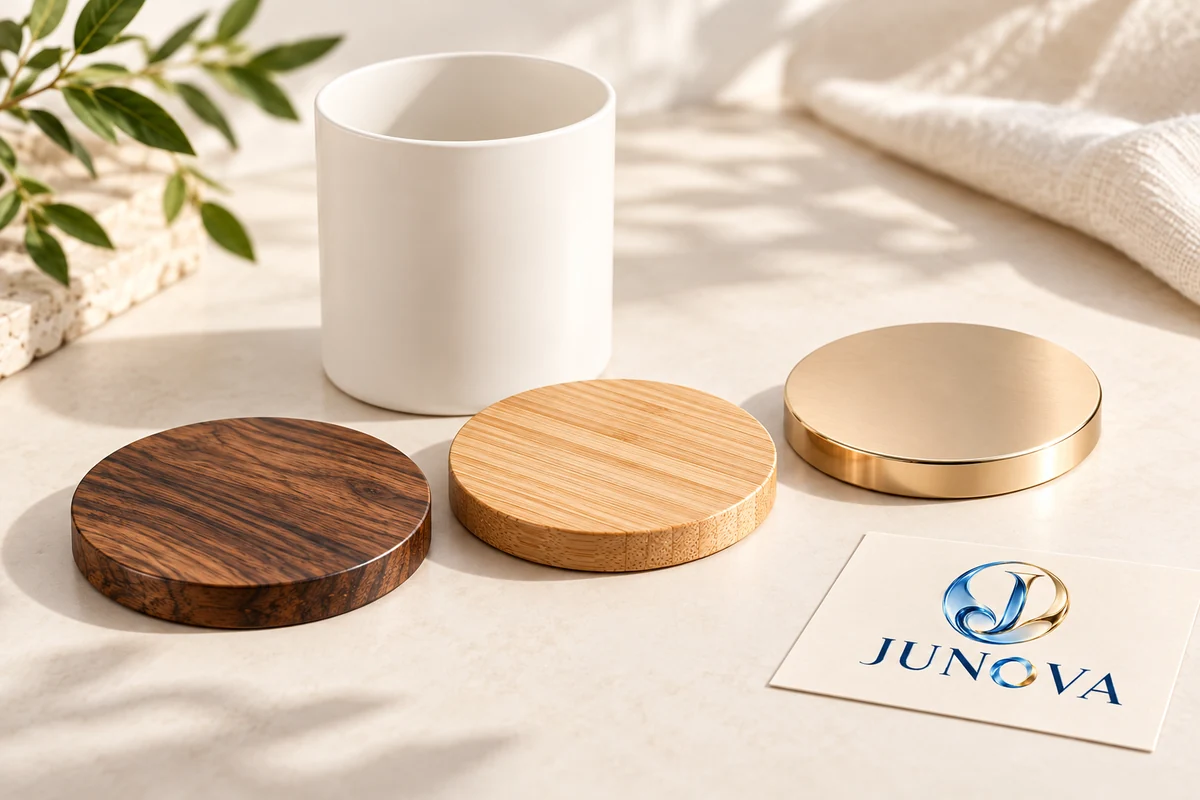
Choose wood for a wood-grain direction, bamboo for a bamboo surface, or metal for a specified colour and finish. Then confirm the complete lid on the selected candle jar. Material is a useful way to shortlist appearance; it does not tell you how the lid locates, what sits underneath it or whether a sealing claim is supported.
For a candle brand comparing alternatives, the practical decision is which material-and-finish combination supports the collection—and what must be included when the supplier quotes it. This guide compares those choices. The separate lid fit guide covers interface measurements and sample pairings.
In this guide
Does a wood, bamboo or metal lid make the jar airtight?
The material name alone does not establish sealing. The lid construction, liner or insert, glass interface and proposed assembly need their own review. A decorative top and a transport closure may be different parts.
Choose the appearance and construction first, then use the wooden lid fit guide to record the mating parts. Keep any sealing requirement in the project brief instead of assuming it from the lid material.
How do wood, bamboo and metal candle lids compare?
Start with a physical finish reference rather than the word “premium.” Put the proposed lid beside the finished jar, label and box: a colour that works alone may change the balance of the collection. Ask what the surface actually is, including any stain, coating or decorative treatment.
| Direction | A useful reason to shortlist it | Define before approving |
|---|---|---|
| Wood | You want visible wood character to be part of the design. | Named wood or material construction, grain direction, tone, stain and acceptable appearance range. |
| Bamboo | You want the bamboo surface to provide a light or textured contrast. | Actual bamboo construction, surface pattern, tone, edge appearance and finish reference. |
| Metal | You want a specific colour, gloss or metallic accent to connect with the artwork. | Metal and surface finish, colour reference, gloss, edge profile and underside construction. |
These are design routes, not a quality ranking. A dark wood option and a pale bamboo option need not serve the same brief. A metal lid can be coloured rather than visibly metallic. Review the selected sample instead of assigning an appearance from the material name alone.
For wood or bamboo, ask the supplier to show representative appearance variation and agree what the range may contain. For metal, compare the actual proposed surface under the same viewing conditions as the jar. Keep the accepted reference with the selected material and finish; one attractive photograph is a weak instruction for a repeat order.
If an environmental claim matters to your brand, request evidence for the specific material, construction and claim. The words wood, bamboo or metal do not by themselves establish a certified source, recycled content or a locally accepted recycling route.
Which lid construction and liner details need confirmation?
A metal lid is not necessarily a screw cap, and a wooden top does not describe everything below it. CandleScience's lid overview, for example, distinguishes threaded metal lids from flat metal lids with an inner fitment. Its bamboo and pine options also use an inner fitment. The material and the attachment arrangement are separate choices.
Those examples describe that supplier's systems. For your proposed jar, identify the complete lid, including the locating part and any insert or liner, then review the named assembly. Do not infer an airtight seal, fragrance-retention result or handling instruction from the top surface. Keep any performance requirement with the responsible component and candle-development partners.
Supplier catalogues also link lids to particular vessels. Continental Bottle's candle-lid table pairs its metal and bamboo references with named glass forms. That is a useful purchasing habit: keep a lid reference beside its matched jar, rather than approving “one bamboo lid” for the entire range.

How can two different briefs use the same jar reference?
JUNOVA Glass's JN-CJ001 cylindrical candle jars currently offer wood, bamboo and metal lid directions. The published glass reference sizes are Ø7 × H8.4 cm, Ø8 × H9 cm and Ø9 × H10 cm. The reference MOQ starts from 100 pieces, depending on the chosen size, finish, lid and packaging. These are starting references, not confirmation that every pictured lid is available for every size.
Take the Ø8 × H9 cm glass reference as a starting point for two invented collection briefs. Neither scenario below is a customer case or an approved JUNOVA Glass combination.
- A pale, texture-led collection: shortlist a bamboo lid against the chosen jar finish and light label. Review the actual surface pattern and edge beside the carton. If the designer instead wants darker, less linear wood character, request a separately identified wood alternative.
- A dark collection with a warm accent: shortlist a champagne- or gold-tone metal finish beside the jar and artwork. Compare the real lid tone and gloss with the printed accent. A similar colour on screen does not establish a physical match.
Keep the jar reference fixed while comparing the alternatives, then record what each complete lid changes. Ask for the assembled outline and actual component mass if packaging or shipping is part of the decision. Do not assume metal is lighter, wood costs more or bamboo provides a better seal without comparing the identified components.
What should you request when comparing lid samples?
Send two named alternatives with the same jar, quantity basis, destination and packing scope. For example: “Alternative A: selected bamboo finish plus its complete matched lid assembly. Alternative B: selected metal finish plus its complete matched lid assembly.” List decoration separately and state whether it is on the jar, lid or both.
Ask the supplier to identify material, finish, underside components, inclusions and any different minimum quantity for each alternative. This makes the comparison about the proposed supply, instead of two incomplete quotations that happen to contain the word “lid.” Review the actual jar-and-lid samples before choosing.
Once the direction is selected, keep its reference in the sample approval record. Use the gift-box insert guide for the packed outline and the candle vessel guide for the wider collection brief.
Browse candle and fragrance glass or discuss a material-and-finish shortlist through custom glass development. Include the chosen jar size, two lid directions, finish references and estimated quantity so the next conversation can resolve the actual alternatives.
Continue your candle packaging brief
For a project enquiry, send the selected jar, target fill, lid, finish, quantity and destination.
Compare glass candle jars