
Specify candle jar capacity as a volume and your intended candle fill as a mass, with the reference level and formulation stated separately. A catalogue name such as “8 oz jar” is not a complete filling specification. Before comparing quotations, agree what each number measures and which sample, drawing and fill line it refers to.
This guide is for candle brands and packaging buyers working with a glass supplier and a filling partner. It includes a capacity worksheet you can use in an enquiry. It does not assign a wax weight to JUNOVA catalogue vessels from their photographs.
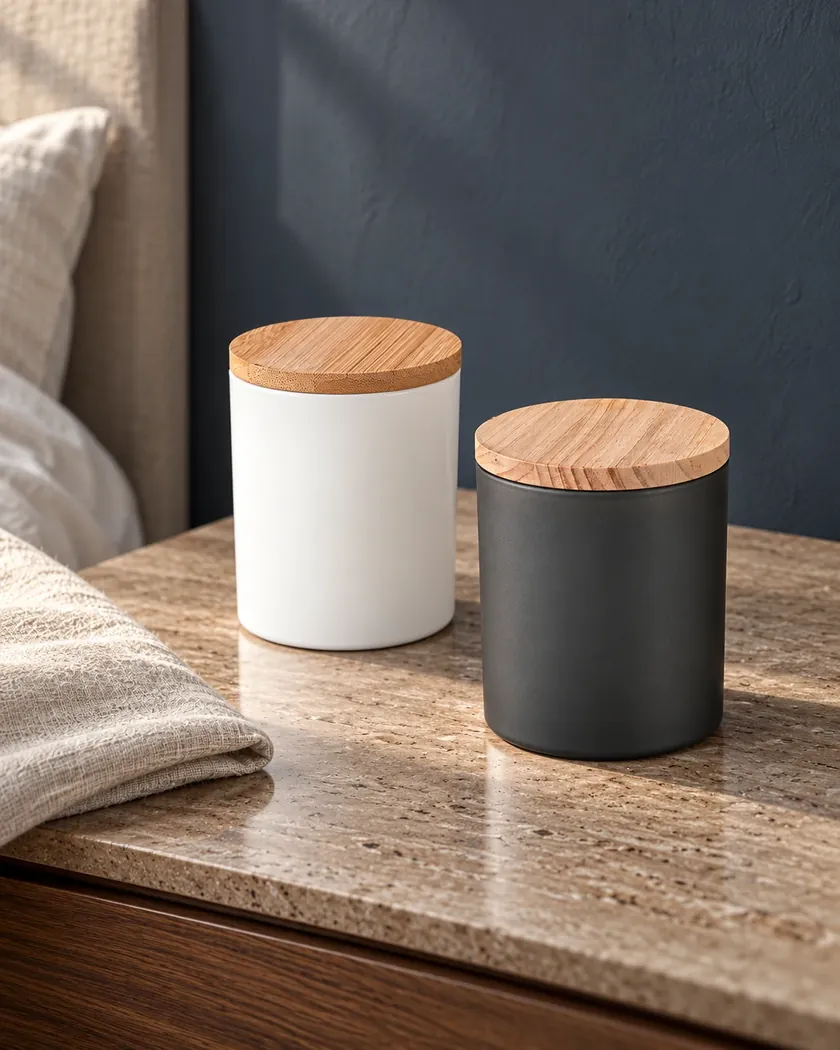
Catalogue reference · JN-002
Start with a form. Confirm the fill separately.
These wood-lid vessels provide a starting reference for the jar and lid combination. Request the dimensions and capacity definition for the selected form before approving a fill target.
AI-styled catalogue scene based on a product reference. No capacity or fill weight is implied.
View the wood-lid candle jars →1. Separate the numbers in a candle jar specification
Ask what an ounce value means before using it in a purchase order. The abbreviation “fl oz” describes volume; “oz” can also be used for weight. In an international brief, writing the volume in mL and the intended fill mass in g makes the distinction easier to follow. Keep the unit beside every number, including values in drawings and spreadsheets.
| Measurement | What to record | Who should confirm it |
|---|---|---|
| Capacity at the brim | Volume and the supplier’s measurement method | Glass supplier |
| Volume at the intended fill line | Reference level, volume and drawing revision | Glass supplier and filling partner |
| Intended fill mass | Mass of the specified candle mixture, with the formulation identified | Filling partner and brand |
| Empty vessel mass | Jar weight, with the included components stated | Glass supplier |
As a useful industry example, CandleScience’s container information distinguishes estimated wax weight at a fill line from liquid capacity at overflow, and explains that fill level and wax density affect the estimate. Its figures describe its own products, not JUNOVA specifications.
When a supplier sends a drawing with a capacity value, ask whether it is a measured sample result, a design target or a catalogue estimate. Record that status. Do not turn an approximate value into a guaranteed production requirement without agreeing how it will be checked.
2. Define the intended fill line on the actual form
A useful fill-line instruction identifies a physical reference, rather than saying “fill near the top.” Ask the project team to show the intended level on the current drawing or an agreed sample photograph. Include the unit, measurement direction and drawing revision so a new sample can be checked against the same instruction.
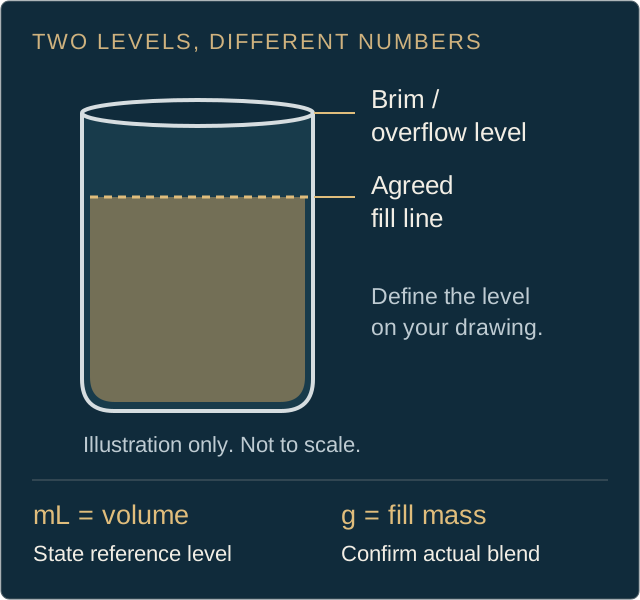
Review the selected lid with the jar. Note any part that sits inside the opening and ask the filling partner to review the proposed filled assembly. The outer height of a vessel, or the appearance of a closed lid, does not define the usable filling space. Keep jar and lid revisions connected in the sample record.
For a range with several sizes, create a separate capacity record for each form. A shared colour or silhouette does not make one fill record transferable to every size. For the wider selection process, see our guide to choosing glass candle vessels.
3. Record a pilot fill with the actual candle mixture
Use a pilot sample to connect the intended fill line to the formulation your filling partner proposes. Record the blend identifier, fragrance version, sample identifier and agreed process conditions. If the formulation or vessel changes, ask whether the existing record still applies before carrying the same target into a new order.
A mass check should compare like with like. For example, when recording the amount dispensed, use an empty assembly and a filled assembly that contain the same jar and fixed components. State whether a wick and tab are included, and keep a removable lid or retail box out of both readings unless the recorded method explicitly includes them.
Keep the ingredient recipe separate from the container record. Have the formulation owner state whether a target means wax alone or the complete dispensed mixture. This prevents a buyer, filler and glass supplier from approving three different interpretations of one number. A capacity record also does not replace the filling partner’s evaluation of the finished candle.
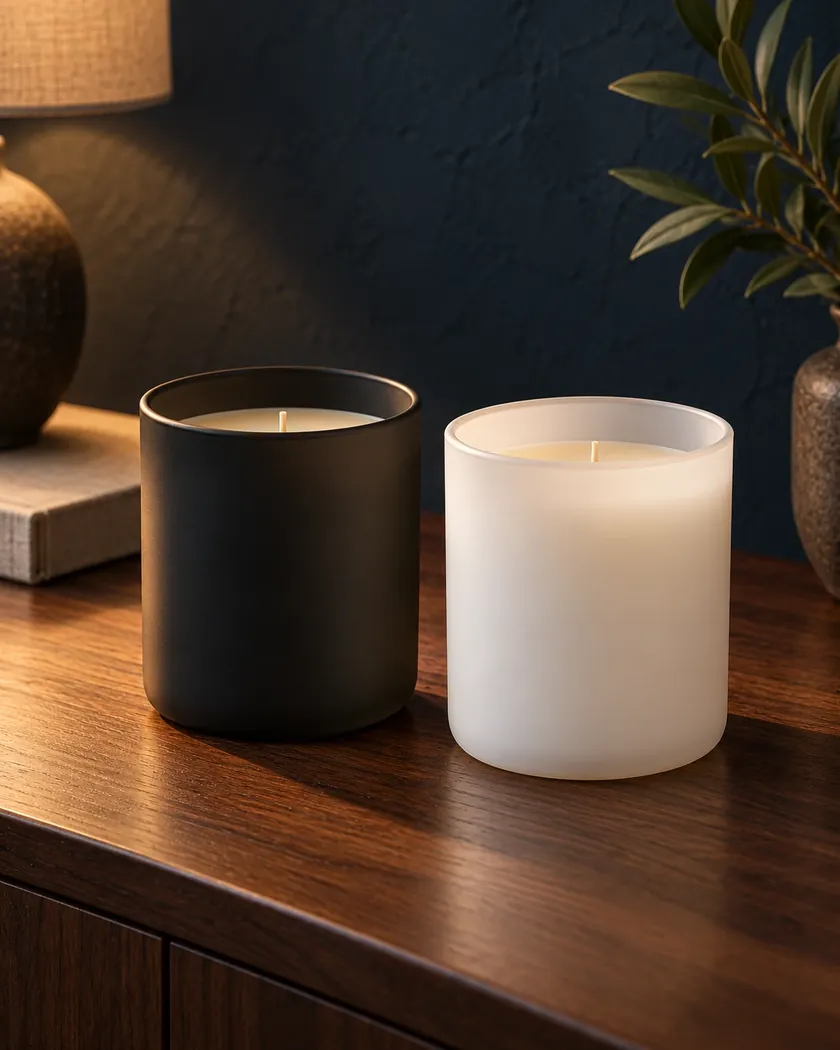
Catalogue reference · JN-001
One visual range, separate sample records.
When reviewing colour candle jars, link each chosen form and size to its own drawing and trial record. A styled photograph communicates appearance; it cannot confirm the amount filled.
AI-styled catalogue scene. Confirm dimensions, intended use and fill details on samples.
Explore the colour candle jars →4. Prepare a capacity specification worksheet
Keep one record per proposed vessel and revise it as decisions are confirmed. The downloadable CSV has blank fields for your project; it contains no preset JUNOVA dimensions, fill weights or acceptance limits. Assign an owner to each open item so a quotation can identify what remains provisional.
| Field | What makes the entry useful |
|---|---|
| Vessel reference | Catalogue reference or drawing number, size and revision |
| Capacity basis | Volume unit, reference level, measurement method and status |
| Intended fill | Target mass, mixture definition and formulation identifier |
| Lid and accessories | Selected components and whether they are included in the quotation |
| Trial record | Sample ID, fill-line reference, recorded readings and reviewer |
| Commercial scope | Quantity by size and colour, decoration, packaging and destination |
Use the custom glass sample approval checklist alongside this worksheet to capture appearance, dimensions, accessories and packing. Agree a project-specific checking method and any acceptance limits with the responsible partners; the blank worksheet does not set them for you.
5. Send one agreed brief to the glass supplier and filler
The glass supplier needs a clear vessel definition and the capacity information you want confirmed. The filling partner needs the actual mixture and proposed assembly to review the intended fill. The brand should connect both records to the same product version before approving the order.
Include unanswered questions directly in the enquiry. For example: “Please confirm capacity at the indicated level; our filling partner will verify the proposed mixture mass on samples.” That gives each partner a specific next step without presenting an untested value as final.
Browse JUNOVA’s candle jar collection for form references, or discuss a new form through custom glass development. Send the selected reference, capacity worksheet, lid preference, quantity and destination market. Dimensions, availability, minimum quantities and production timing need confirmation for the agreed project.